How a 4-Stroke Engine Works
Suck, squeeze, bang, blow — the four strokes that power almost every car on the road, running live under your fingertip.
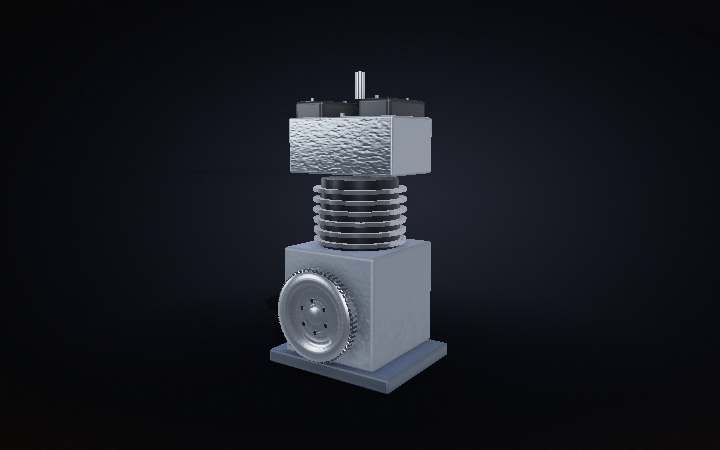
Step 01 of 06
The anatomy
A single-cylinder engine as it really looks: a finned cylinder barrel bolted to a crankcase, capped by the head with the spark plug on top and the flywheel spinning out the side. Scroll and the castings lift away to show the mechanism working inside.
Step 02 of 06
1 · Intake
The intake valve opens as the piston travels down, expanding the cylinder like a syringe. The pressure drop pulls a fresh mix of air and fuel (blue) in through the intake port.
Step 03 of 06
2 · Compression
Both valves seal shut. The crank drives the piston back up, squeezing the mixture into a fraction of its volume. Compressing it makes the coming explosion far more violent — and the engine far more efficient.
Step 04 of 06
3 · Power
At the top of the stroke the spark plug fires. The mixture ignites and the burning gas (orange) expands hard, hammering the piston down. This is the only stroke that actually produces power — the crankshaft stores it as spin.
Step 05 of 06
4 · Exhaust
The exhaust valve opens and the rising piston shoves the burnt gases (grey) out through the exhaust port. The cylinder is empty again — ready for the next gulp of fresh mixture.
Step 06 of 06
Run it
All four strokes, over and over — hundreds of times a second in a real engine. Two full crank revolutions per power stroke, with the flywheel smoothing the gaps between bangs.