How a Gun Silencer Works
Silencers do not silence. A suppressed shot is still around 130 decibels. The tube just catches the burst of gas leaving the muzzle and makes it squeeze, swirl and cool its way out.
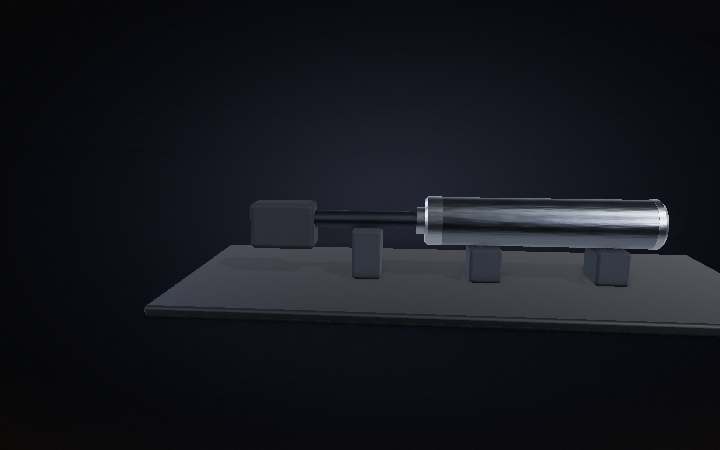
Step 01 of 07
1 · A tube that does not silence
A suppressor is a steel tube fixed to the end of a barrel. The nickname is generous: a suppressed shot is still around 130 decibels, louder than a jackhammer. What the tube changes is how the burst of gas behind the bullet gets out. (In many places they are tightly regulated, for good reason.)
Step 02 of 07
2 · Without it: a popped balloon
Take the tube off. Behind the bullet, the barrel is full of propellant gas at enormous pressure. The instant the bullet clears the muzzle, that gas bursts into open air and expands all at once, with a flash. That sudden release is most of what you hear as the bang.
Step 03 of 07
3 · Inside the tube
Cut it open and it is mostly empty space. A wide blast chamber sits right at the muzzle. Past it, a stack of cone-shaped baffles runs to the exit cap, each with a single hole on the bore line. The metal is there to steer gas, not to block it.
Step 04 of 07
4 · The bullet touches nothing
Every hole is wider than the bullet and they all line up on the bore. The bullet flies down the centre line and out of the front without brushing a baffle. It is never the thing being slowed. The gas, which cannot fly straight, is.
Step 05 of 07
5 · The gas gets stuck in traffic
The gas follows the bullet in, fills the blast chamber and expands, losing pressure. To get out it must squeeze through hole after hole, and each cone turns part of it aside into a chamber where it swirls, slows and cools. The steel soaks up the heat, which is why the baffles warm up. What was one violent pop leaves as a long, weak push.
Step 06 of 07
6 · One pop becomes a sigh
Same shot, two muzzles. Bare, the gas hits open air at full pressure and the shock races outward. Through the tube, it leaks out slowly at low pressure. A good one takes roughly 20 to 30 decibels off. Thirty decibels is a thousandth of the sound power, and the shot is still around 130 decibels.
Step 07 of 07
7 · What is left
A rifle bullet travels faster than sound, so it builds its own shock wave, a sonic crack, all the way downrange. No tube can touch that. Subsonic ammunition has no crack, and the gun itself still clacks. Suppressed does not mean silent: it means the blast got spread out and softened.