How a Hybrid Engine Works
A hybrid has no gearbox. One small set of planetary gears joins the petrol engine, a generator and the wheels, and how fast the generator spins is the gear ratio.
Step 01 of 09
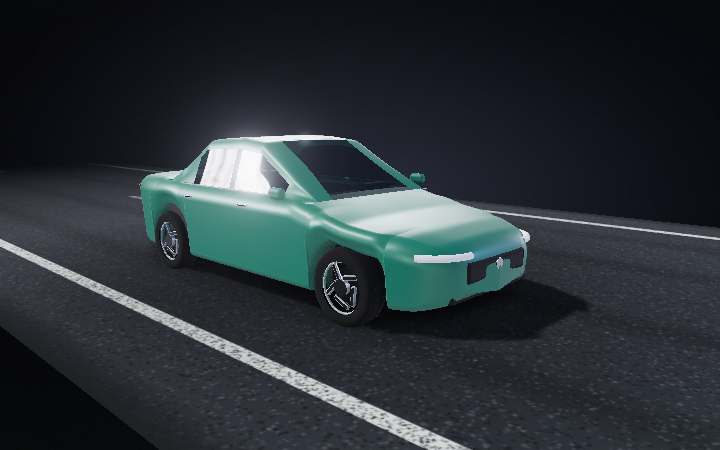
It never shifts
A hybrid looks like any other car. Yet it creeps away in silence, the engine drones at one steady pitch while you speed up, and nothing ever changes gear. There is no gearbox hiding in there to hear. The trick is somewhere inside.
Step 02 of 09
An engine, two motors and a battery
Under the skin: a small petrol engine, two electric motor-generators called MG1 and MG2, an inverter that shuttles power between them, and a battery at the back. Look for what is missing. No clutch, no torque converter, no gearbox.
Step 03 of 09
One small set of gears joins all three
This single planetary gearset is the whole transmission. The engine feeds the amber carrier. The blue sun gear is bolted to generator MG1. The green outer ring turns the wheels, and motor MG2 pushes on that same ring. Three things, three connections, four planet gears in between.
Step 04 of 09
The generator is the gear lever
The three speeds always sit on one straight line. The ring is tied to the road, so it cannot move on its own. To change the engine speed, the generator has to change its speed. Watch the amber engine marker slide while the green wheel marker stays put and the blue generator swings further. That swing is the gear ratio. With 30 teeth on the sun and 78 on the ring, the generator turns 3.6 times the engine minus 2.6 times the wheels.
Step 05 of 09
Pulling away: the engine just stops
At low speed the car runs on the battery alone. The engine stays stopped, its pistons still. MG2 pushes the ring and the car moves. The sun gear spins backwards, freewheeling, because the carrier is standing still while the ring turns, and the generator does no work. No fuel burned, no noise.
Step 06 of 09
Engine on: split the power
With the engine running its torque splits on the way through the gears: about seventy percent goes straight to the ring and the wheels, about thirty percent spins the sun and MG1. MG1 turns that into electricity, and whatever the wheels do not need tops up the battery. The engine is charging the battery while it drives.
Step 07 of 09
Floor it: both push
Press the pedal and the engine speeds up, and MG2 adds its own push to the ring from the battery. The car gets the engine and a motor at once, so a small engine can feel like a large one. The battery runs down for a moment, then recovers.
Step 08 of 09
Braking makes electricity
Lift off and brake, and the engine switches off. Now the wheels turn MG2 against its own push, so it works as a generator and the car slows as the battery fills. The energy you would have thrown away as heat in the brakes goes into the battery instead, and MG2 pulls the car away again afterwards.
Step 09 of 09
Run it
Back together. Electric pull-away, engine joining in, a push for the hill, a glide to a stop. The car chooses on its own, and the only gearbox is a generator speeding up and slowing down. The gearbox was a generator all along.