How Noise-Cancelling Headphones Work
Two microphones, one driver, and a wave built to cancel another wave out. How feedforward and feedback ANC catch noise before and after it reaches your ear — and why it can silence a jet engine but not your coworker’s voice.
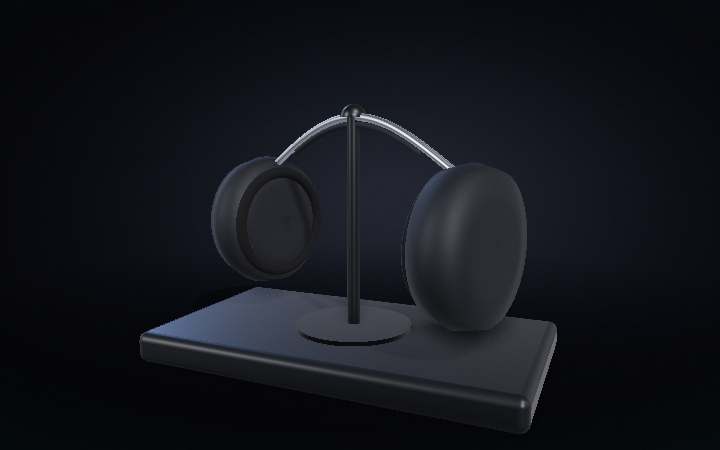
Step 01 of 08
1 · Two microphones, one trick
These look like ordinary over-ear headphones. But each earcup is quietly listening in two directions at once — one microphone facing out, one facing in — and using what it hears to erase the noise around you before it ever reaches your eardrum.
Step 02 of 08
2 · What is hiding under the shell
Pull the outer shell away and the trick is right there: a driver to make sound, a small board to run the math, and two microphones — one on the outside of the cup, one on the inside, each doing a different job.
Step 03 of 08
3 · The part that makes every sound
A magnet sits behind a coil of copper wire attached to a thin diaphragm. Send it an electrical signal and the coil pushes and pulls against the magnet’s field, and the diaphragm shivers back and forth thousands of times a second. This one driver plays your music AND the anti-noise — mixed together, at the same time.
Step 04 of 08
4 · Listening before the noise arrives
The outward-facing microphone catches ambient sound — an engine drone, the hum of a plane cabin — an instant before it reaches your ear. That head start matters: it gives the processor just enough time to build a response before the real sound gets there.
Step 05 of 08
5 · A wave built to erase a wave
The processor flips that captured noise upside down — inverted, peak for trough — and the driver plays it back as “anti-noise.” Where the two waves meet, they add up to nothing: this is destructive interference, the same physics that makes noise-cancelling headphones look like magic.
Step 06 of 08
6 · Double-checking the result
A second microphone, facing inward toward your eardrum, listens to what actually got through. If the seal shifts or the cancellation is not quite perfect, this inward mic catches the leftover noise and the processor corrects the anti-noise signal on the fly, continuously.
Step 07 of 08
7 · Why it cannot cancel a voice
This whole trick only works on slow, steady waves — engine drone, HVAC hum, the low rumble of a cabin. Fast, changing sounds like speech move too quickly for the processor to track and invert in time. Those get stopped the old-fashioned way: the foam cushion physically sealing against your head, like an earplug.
Step 08 of 08
8 · Silence, engineered
The shell closes back up and every trick disappears from view — two microphones, one driver, and a wave shaped to erase another wave, working continuously, tens of thousands of times a second, so the world gets quieter the moment you put them on.